How packets find their way across the internet
Your message is split into packets, passed from router to router over radio, copper and fiber, then rebuilt at the other end in a split second.
Key takeaways
Messages travel as small packets, not in one piece.
Each packet carries data plus addressing information for the network.
Routers pass packets network to network, and packets may take different routes.
At the destination, the packets are put back together into your message.
What actually happens when you hit "send"? You see a message arrive on someone else's screen almost instantly. Behind it is a journey across networks, sometimes around the world, in a fraction of a second.
Your message becomes packets
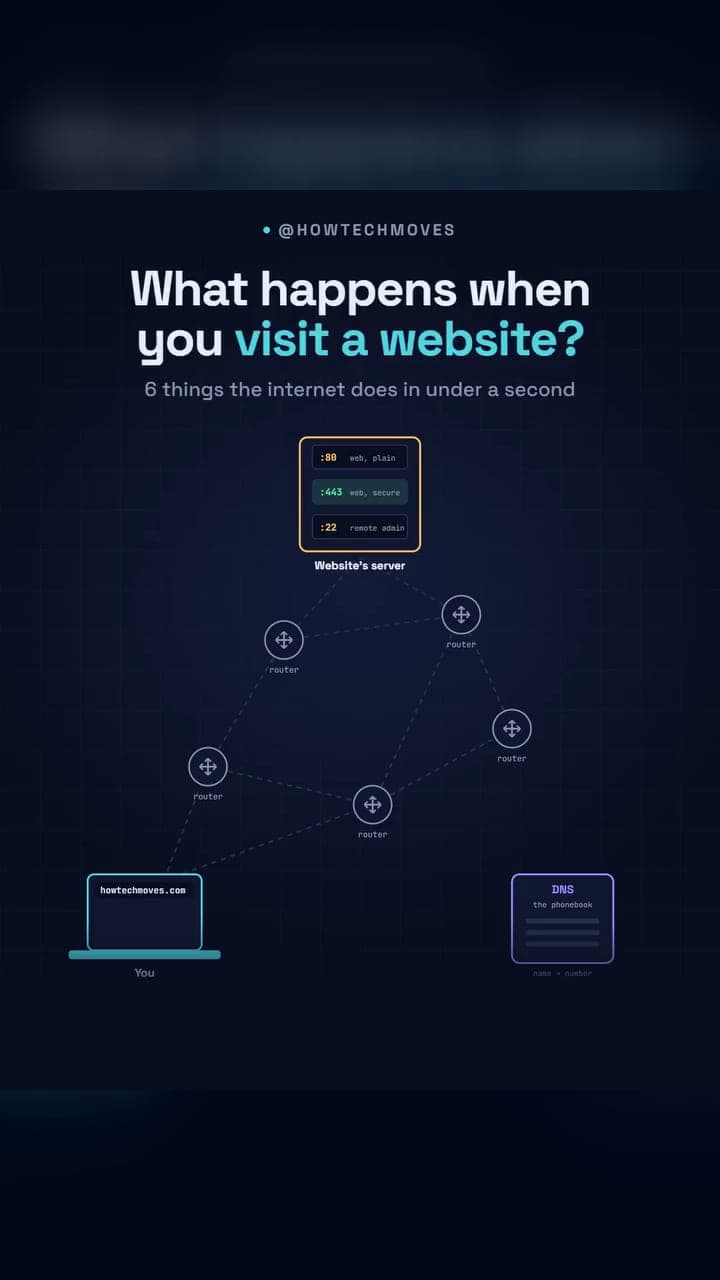
Your message does not travel across the internet in one piece. It gets broken into small chunks called packets. Each packet carries a piece of your data plus addressing information, so the network knows where to send it. The key part of that address is the destination's IP address, a number that identifies the device on the other end. When you type a name instead, like a website address, DNS acts as the internet's phonebook and looks up the number first.
Routers pass them along
Routers pass these packets from one network to the next, each hop moving them closer to their destination. No single router plans the whole trip. Each one only decides where a packet should go next, which is why some packets from the same message may even take different routes.
Along the way, your data changes form. It travels as radio signals over Wi-Fi, as electrical signals through copper, and as pulses of light through fiber optic cables, including cables beneath the ocean. The packets stay the same. Only the way they are carried changes.
Rebuilt at the other end
At the destination, those pieces are put back together. Packets are numbered, so they can be rebuilt in the right order even if they arrive out of order. Then your message, photo or video can appear on someone else's screen.
When the connection uses HTTPS, each piece is also encrypted before it leaves your device, so the routers in between carry packets they cannot read.
Why it matters
Splitting data into packets is what lets huge numbers of devices share the same networks. Nobody needs a dedicated line: packets from many different conversations travel side by side on the same cables, and if one path is busy or broken, traffic can take another. That design is a big part of why the internet keeps working even when parts of it fail.