How a VPN protects your connection
A VPN encrypts your traffic in a tunnel to a VPN server and hides your IP address. It helps on public Wi-Fi, but it is not full anonymity.
Key takeaways
A VPN builds an encrypted tunnel from your device to a VPN server.
Your provider and public Wi-Fi see scrambled data, not the sites you visit.
Websites see the VPN server's IP address instead of yours.
It is not full anonymity: you still need strong passwords and updates.
A VPN, or virtual private network, creates a secure connection between your device and the internet. It encrypts your data and hides your IP address, helping protect your online activity, especially when you use public Wi-Fi. Here is what actually changes when you switch one on.
Without a VPN
Normally your traffic travels from your device, through the Wi-Fi network and your internet provider, and on to the website. Anyone along that path, such as your provider or someone watching the same network, can see where you go. HTTPS already encrypts the content of most websites, but which sites you connect to, and your IP address, are still visible along the way.
With a VPN
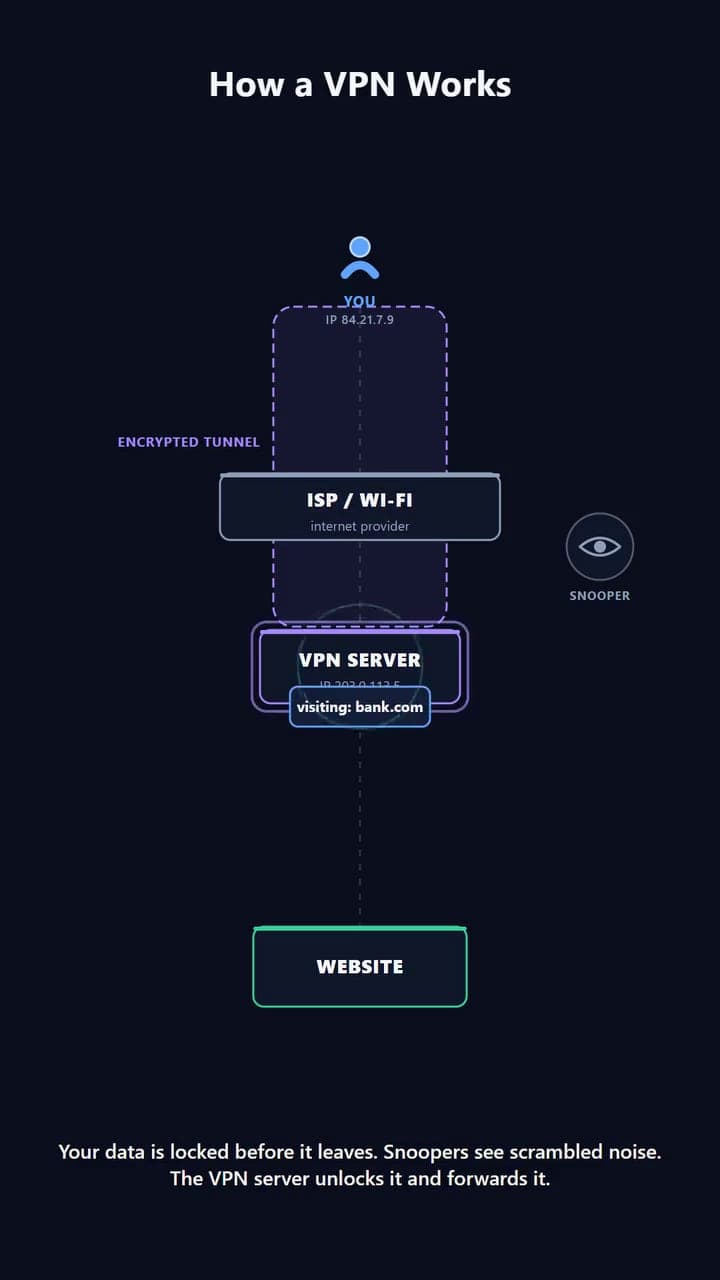
- The tunnel. Your VPN app builds a private, encrypted tunnel from your device to a VPN server.
- Locked before it leaves. Your data is encrypted on your device before it goes out. Your provider and anyone else on the network only see scrambled data heading to the VPN server.
- Unlocked and forwarded. The VPN server decrypts your traffic and forwards it to the website.
- A different address. The website sees the VPN server's IP address, not yours.
What a VPN does not do
A VPN does not make you completely anonymous, and it does not protect you from every online threat. The VPN provider can see the traffic leaving its servers, so you are shifting your trust from your internet provider to the VPN company. And once you sign in to a site, that site still knows who you are.
You still need strong passwords, updated devices and caution with suspicious links. A VPN will not stop you from typing your password into a fake login page.
Why it matters
On public Wi-Fi in a cafe, airport or hotel, you do not control the network or know who else is on it. A VPN keeps your traffic unreadable to them and hides which sites you visit from the local network and your provider. It is a useful layer of privacy, as long as you treat it as one layer and not as a shield against everything.